Finding Community: What Inclusive Sex Education Means to Intersex Youth
Interviews with a cohort of intersex young people from interACT’s Youth Advocacy Program
In 2025, SIECUS published Intersex Inclusion in Sex Education, a blog housing key definitions and history, policy and practice recommendations, and resources. The following is an excerpt defining intersex.
The term intersex is an umbrella term used to describe unique differences in sex traits or reproductive anatomy… Intersex also describes a community of people who share these experiences (e.g.,” the intersex community”) and who make up about 1.7% of the population (or 5.7 million people in the United States)… For more definitions, check out interACT’s Intersex Variations Glossary here.
What do you remember learning about sex, puberty, and bodies in school?
Amelia, 22
When I was in middle school, the girls and boys were split up and we were briefly talked to about puberty. My state has restrictions on sex education and discussing gender and sexuality with students, so the sex education I received in high school was very limited. We learned about STIs and to label reproductive systems, but reproductive anatomy was taught as a binary and there was no mention of intersex variations.
Myrtle, 26
I recall learning in middle school some brief things about the menstrual cycle in a single “parental approval” health class, as I was categorized with the girls when they split the class into two. We didn’t learn anything about the male body in that class, and if we did, it wasn’t nearly enough to understand sex in any capacity.
How and when did you first learn about intersex traits? (Or that “intersex” described your body?)
Misha, 25
I learned the term intersex could apply to me when I was about 22, having conversations with friends about puberty. When I told them about all of the doctor’s visits I had had, and asked if that was normal, they told me it wasn’t, and sounded really scary. I started to realize then that the term “intersex”, which I had vaguely heard before, described my body and experiences.
Tanis, 19
I first learned about intersex traits while doing my own research online and coming across InterACT’s Intersex Variations Glossary when I was 14 years old. It was the first time that I had ever heard about experiences similar to mine, and seen them described as intersex. I already knew about the physical differences in my body, but putting a name to these differences, finding a community that understood me, and finally being able to understand why I was different (and that it wasn’t a bad thing) was so crucial for my health.
As an intersex young person, what do you wish was taught about intersex variations in sex education?
Amelia, 22
I wish intersex variations were discussed at all. Teaching about intersex variations fits very naturally into sex ed, because topics like sexual development and reproductive anatomy are already being discussed. When learning anatomy, it’s very relevant to talk about variations in genitalia and reproductive structures. It would also be great to talk about what it means to be intersex in more depth (for example discussing harmful medical interventions) and connect it to other topics that should be emphasized in sex ed, like bodily autonomy and consent.
Tanis, 19
I wish that intersex variations were included in sex education as just another natural variation in anatomy, hormones, and genetics— instead of being described as extremely rare disorders that always need to be “fixed”. I wish I had known that I didn’t have to be in pain, and that surgery isn’t the only option. I wish I knew about all of the options for fertility treatment, contraception, and non-penetrative sex, including how it might look for someone who is intersex. I wish I had been aware of the possibilities.
What could a teacher have said or done to make you feel included, without singling you out?
Amelia, 22
I would have felt more included if teachers refrained from characterizing any experience as universal. In my sex ed, cis perisex experiences were treated as ubiquitous. Because we were split by gender, it was assumed that everyone in the girls group would have the same experience and everyone in the boys group would have the same experience, but a lot of what was treated as a universal experience for girls, like getting a period, didn’t apply to me. Learning about puberty and sex in a less gendered way and not treating anyone’s experience as universal would help to include not only intersex kids, but anybody whose experiences of puberty or sex fall outside of what’s considered the norm.
Were your peers/friends aware or did they understand what it meant for you to be intersex?
Apollo, 27
When I first learned that I was intersex, I tried to explain it to a peer my age, but I didn’t know how to articulate it that well, and I remember the confusion on her face leading me to go “ah, never mind”. As a teenager, I was able to describe my body to others with much more confidence, and I felt comfortable sharing that information to some of my friends at the time. My openness actually led to my best friend coming out to me as having the same variation!
How can inclusive sex education help students feel less alone or more confident?
Amelia, 22
Intersex inclusive sex ed can help students feel more confident because it gives everyone a basis for discussing intersex topics, making it easier for intersex students to discuss their experiences with their peers if they choose to do so. Intersex inclusive sex ed would also give intersex students the language to talk about their bodies. Much of what I learned in school wasn’t relevant to my body, so I had to learn how to describe my body from doctors and any resources I could find on the internet. Finally, learning about the diversity of bodies can help everyone feel less shame about their body. Intersex or not, lots of people feel shame about their bodies being different or not meeting certain narrow standards, so to learn that there are so many different ways bodies can develop and that it’s all normal can help people let go of shame and feel more confident.
Misha, 25
It’s paramount that young people understand someone’s body, appearance, or medical status does not make them more or less worthy of love and care. It helps intersex kids not to feel like such outcasts the way I did, and makes it harder for bullies to see such traits as an acceptable thing to pick on.
What should adults pushing for better sex ed policy understand about intersex young people that they usually miss?
Apollo, 27
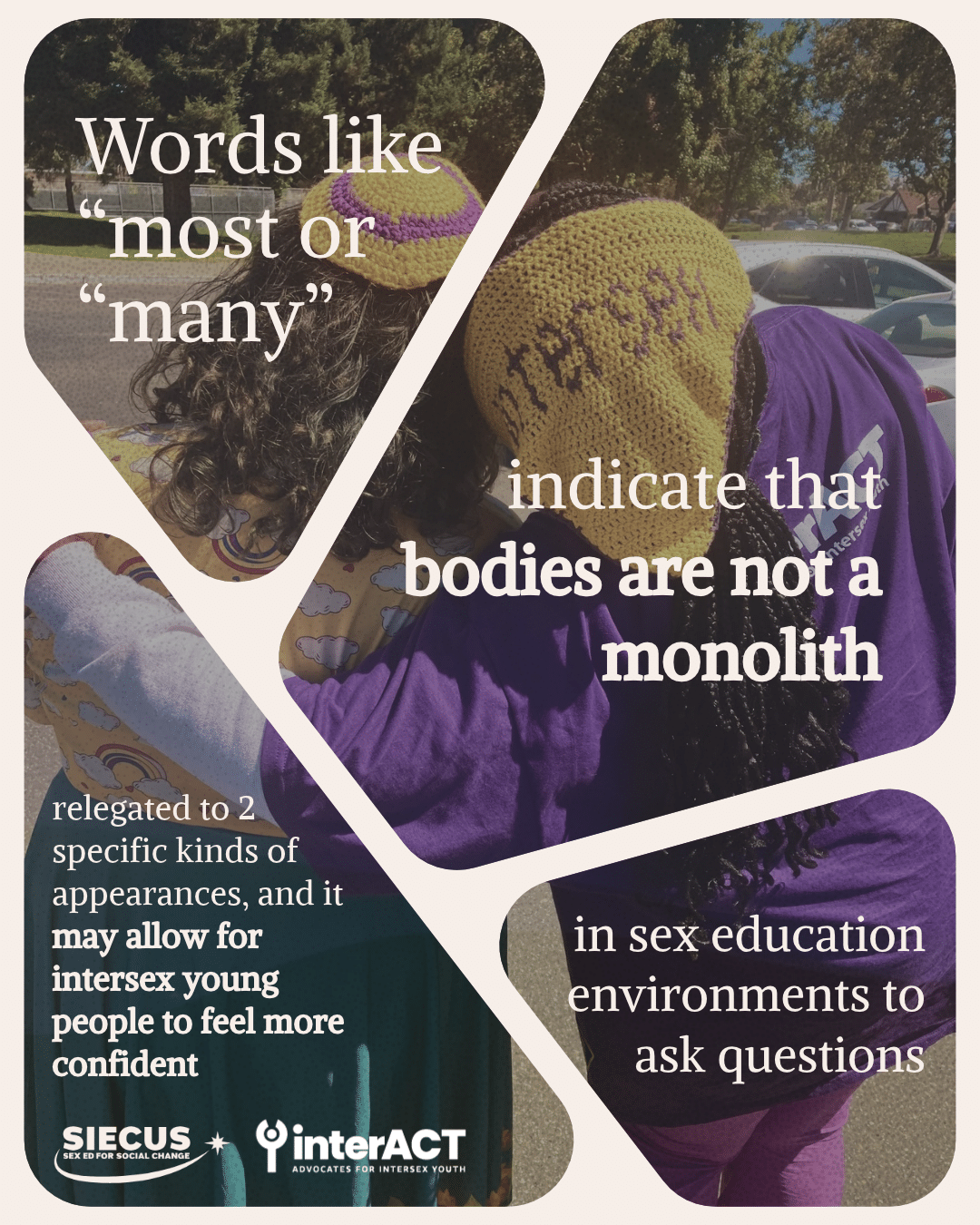
They should understand that there is a large number of intersex variations, and while it may be difficult to cater sex education to ALL of us, there are still ways to make a curriculum more inclusive for us! Using words like “most” or “many” indicate that bodies are not a monolith relegated to 2 specific kinds of appearances, and it may allow for intersex young people to feel more confident in sex education environments to ask questions.
Misha, 25
When I was younger, I remember a lot of adults around me not taking how I was treated seriously. They were real, serious problems I was going through at age 12, and I had enough awareness at that age to know it wasn’t fair. For intersex youth, having our issues heard and processed in a mature and conscientious way, instead of being treated like we’re unable to understand how the world works.
What would your dream comprehensive sex education include?
Myrtle, 26
History of the AIDS crisis & it’s importance to the fight for LGBTQ+ rights;
focused on bodies of all shapes, colors & sizes;
and direction on spotting & then unlearning body shaming (for the self & others)
Misha, 25
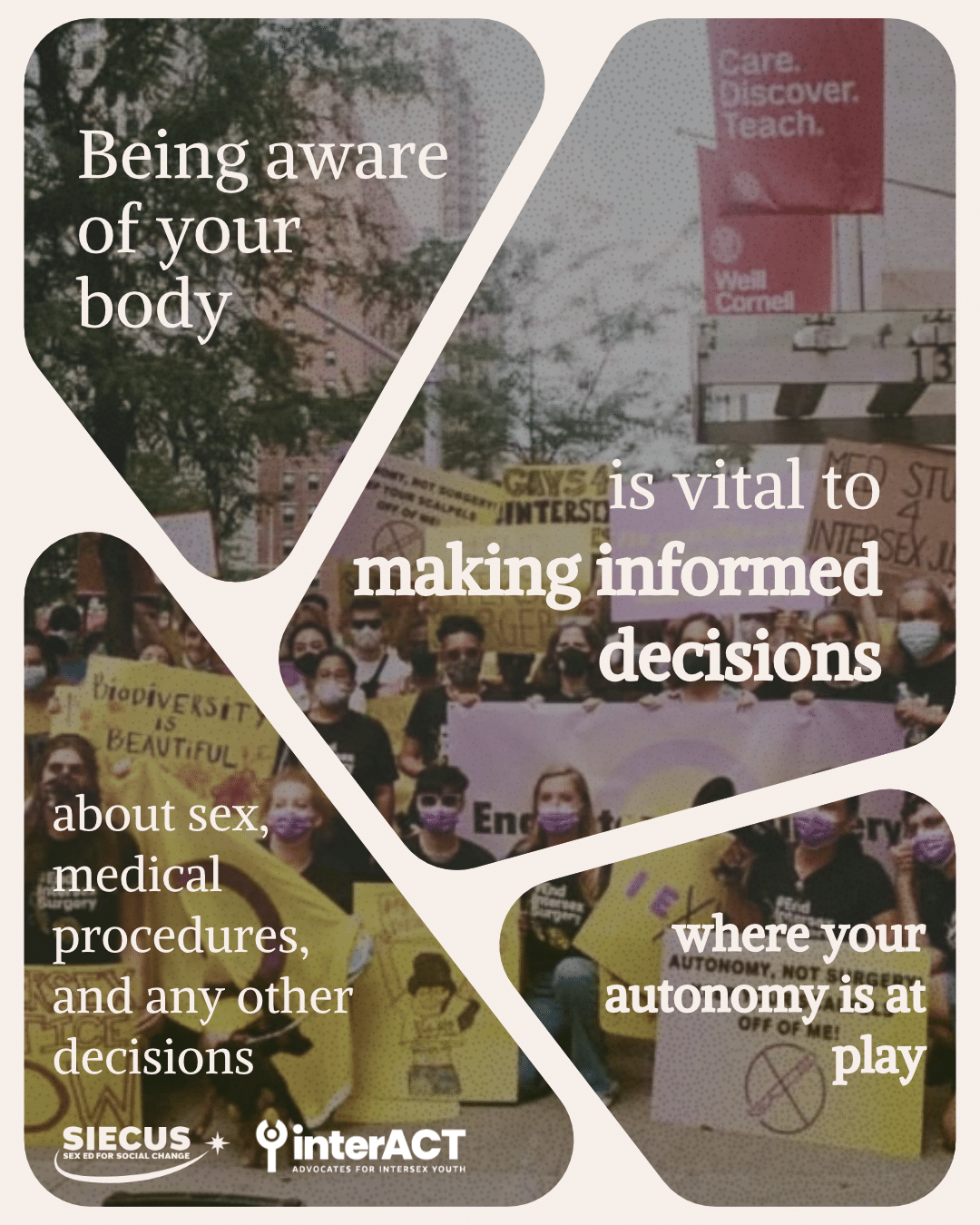
Comprehensive sex education needs to trim out any and all sense of shame from its curriculum, because being aware of your body (and the bodies of those you care about) is vital to making informed decisions about sex, medical procedures, and any other decisions where your autonomy is at play. I wish that more resources for BIPOC and ethnic minorities were included by default, because my painful experiences were very much exasperated by white supremacist notions of male and female bodies. For it to be comprehensive, it really must consider so many lived realities, instead of just what perisex white people experience.
What books, communities, movies, creators, or other resources would you recommend teachers share with students to further educate about intersex people?
Amelia, 22
Some materials teachers could use in class are excerpts from intersex memoirs people have written like Born Both by Hida Viloria or Nobody Needs to Know by Pidgeon Pagonis. I would also recommend the “What We Wish Our Friends Knew” brochure from interACT as a resource that could help students learn how to engage with intersex peers in a respectful way. There are also great Ted talks (for example “The way we think about biological sex is wrong” from Emily Quinn) and youtube videos, like the classic “What it’s Like to Be Intersex” Buzzfeed video, which is still available on interACT’s youtube channel. In general, I highly recommend materials that feature intersex people telling our stories in our own voices. For students who have likely never heard an intersex person telling their story before, it humanizes us by emphasizing that intersex issues are real people’s experiences and not just hypothetical situations that occur, and for intersex students, it’s nice to feel like you’re not alone.
Misha, 25
interACT has done wonders for me as a young adult navigating this identity, and I think teens would benefit from joining this support group; Many folks within it have described how invaluable it is to have a space by and for intersex people. I know a lot of kids like manga now as well, and there’s a release from 2005 called “IS” which primarily focuses on how a young intersex person navigates school, family, and romance all with the social pressures being intersex can entail. It’s a bit of a hidden gem in my opinion, and even though many scenes made me cry or feel a tad outdated, I think I would’ve felt so lucky to have an engaging comic like that as a kid.
Sign Up for Email Updates
Interested in receiving the latest updates from SIECUS? Join our email list today.